A Buddhist Temple Rises in the Bay Area
Part Two
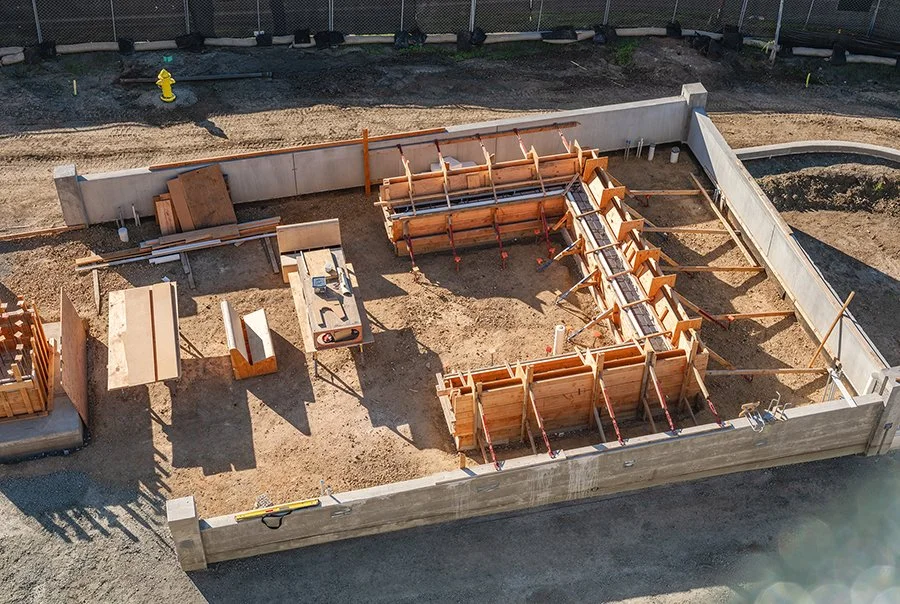
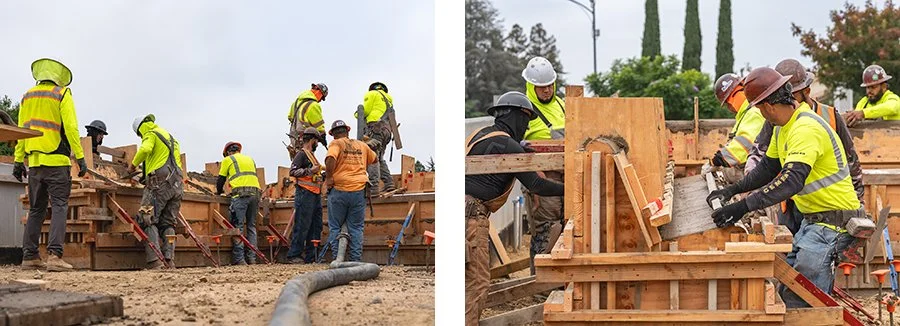
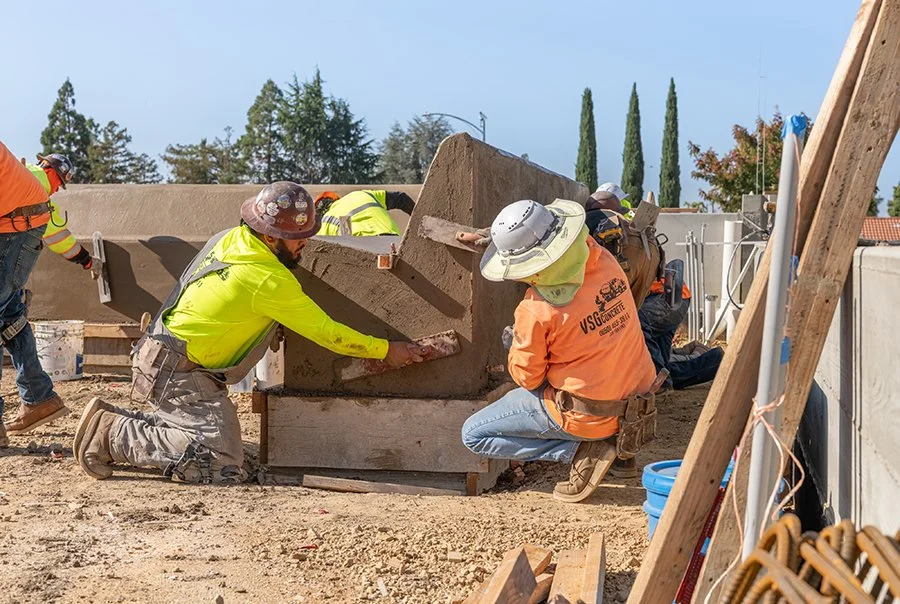
The day begins early at Wat Khmer Kampuchea Krom. Crews arrive before sunrise and work begins as first light appears. Progress is marked by visible changes on site and continued design coordination with trusted partners in Cambodia. Step by step, the collective vision is taking shape.
This is the second installment in an ongoing series created in collaboration with Andrew Mann Architecture (AMA) and A Khmer Buddhist Foundation. The new temple in San Jose will serve as a cultural and spiritual home for the local Khmer community. Through this work, we follow the team’s effort to realize a shared vision rooted in culture, community and craft.
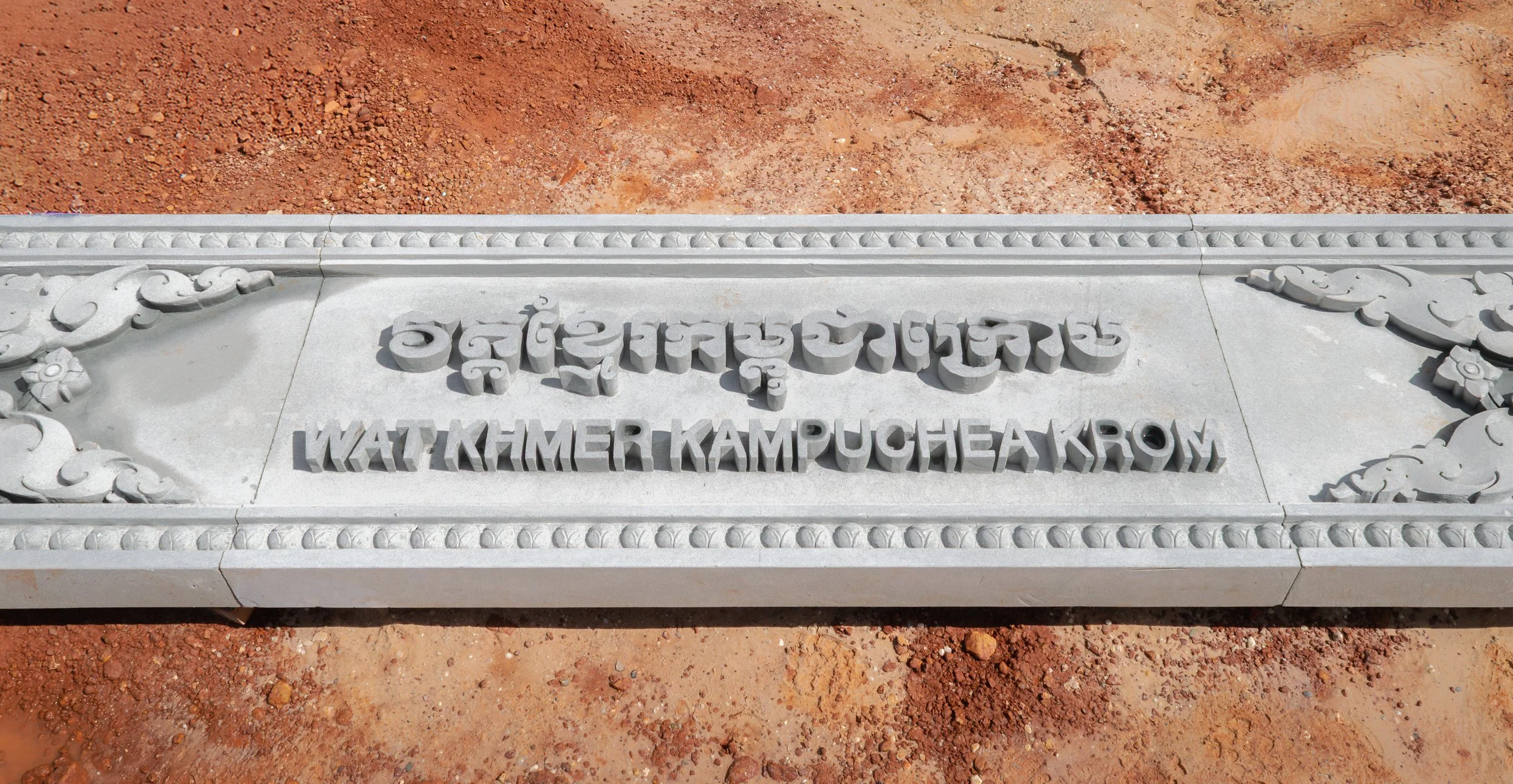
On the Ground in Cambodia
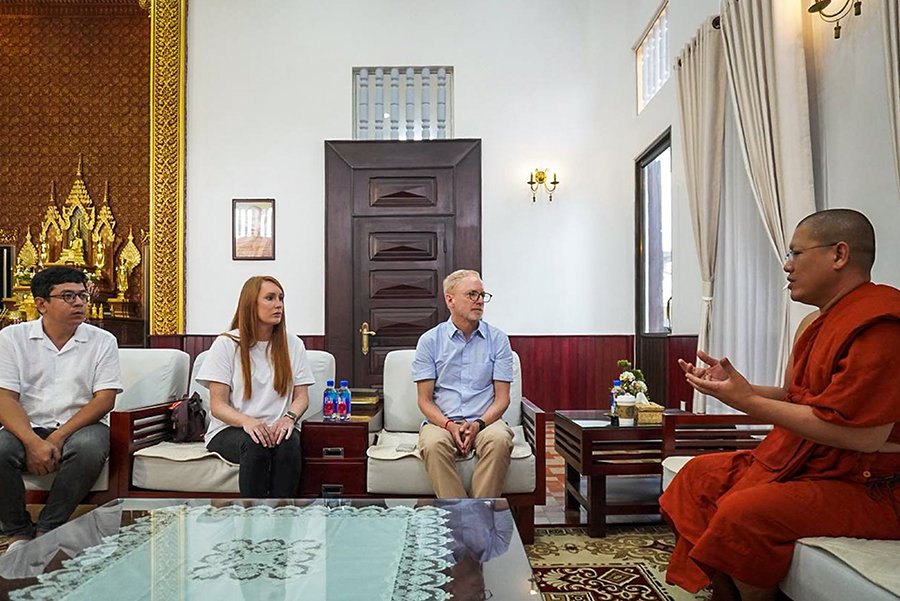
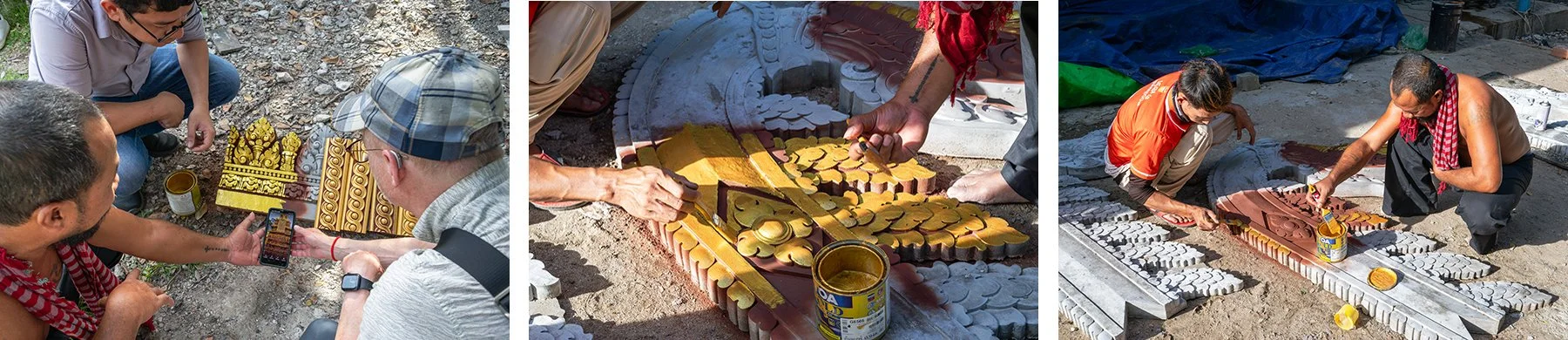
This fall, the AMA team returned to Cambodia for continued collaboration with AO Architects, our architectural partner in Phnom Penh. Together they visited workshops where artisans are shaping the project’s most culturally significant elements.
The elements being crafted are more than decorative. Each draws from Khmer heritage and centuries of practice. Their integration bridges past and present, linking traditional artistry with modern construction. Grounded in the Foundation’s goal of supporting traditional artistry in Cambodia, this ongoing collaboration ensures meaning and intent are carried through every phase of the project.
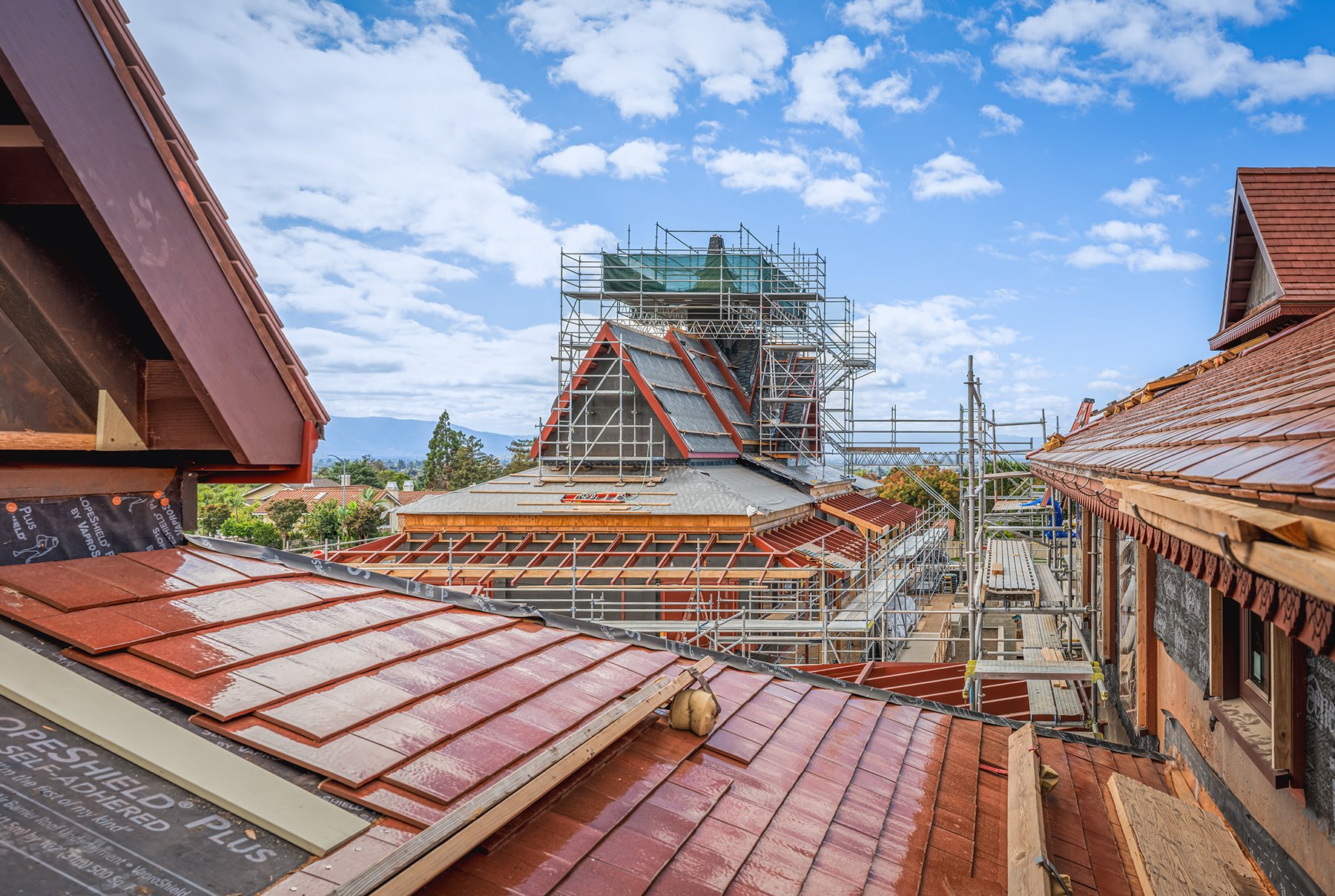
On Site in California
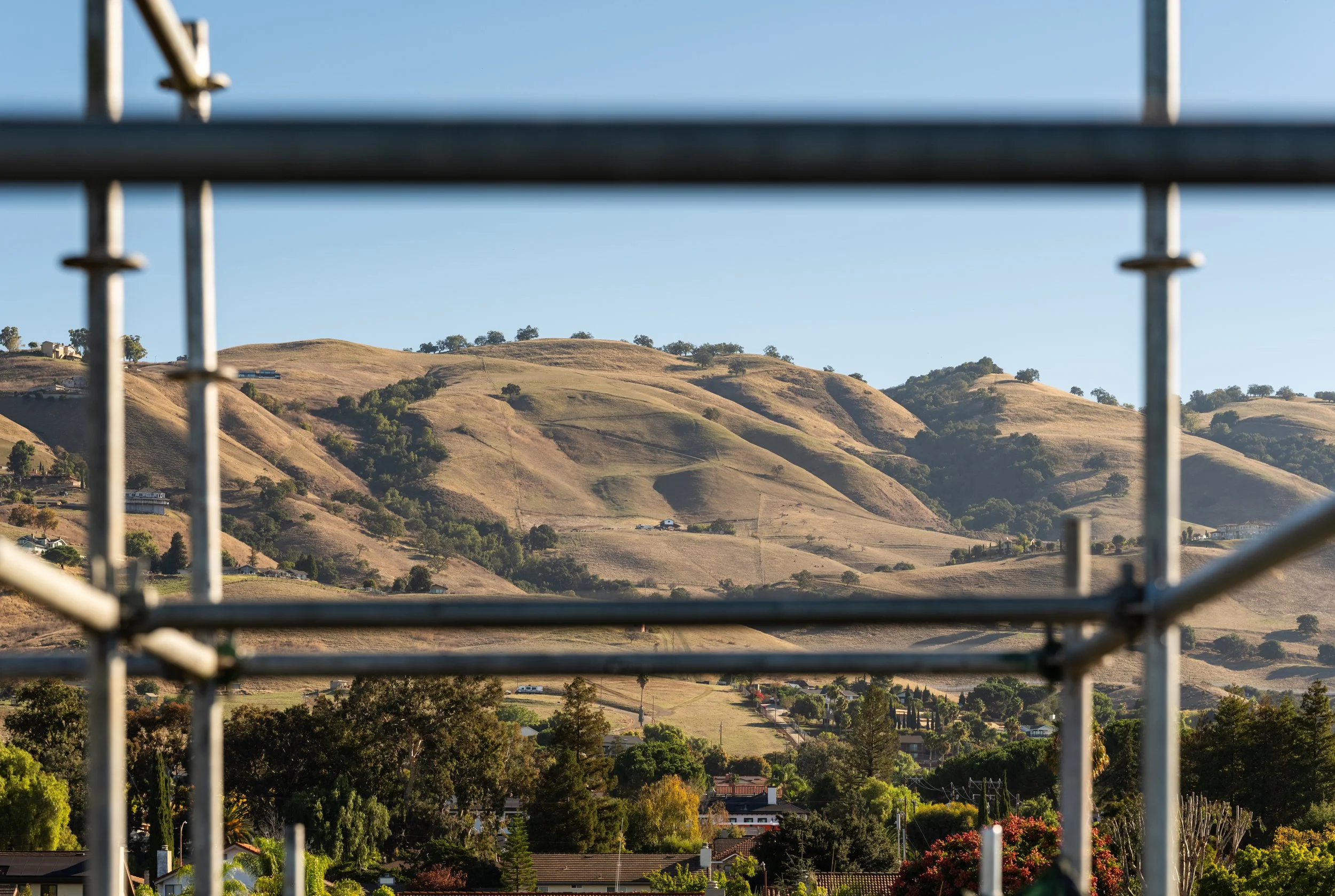
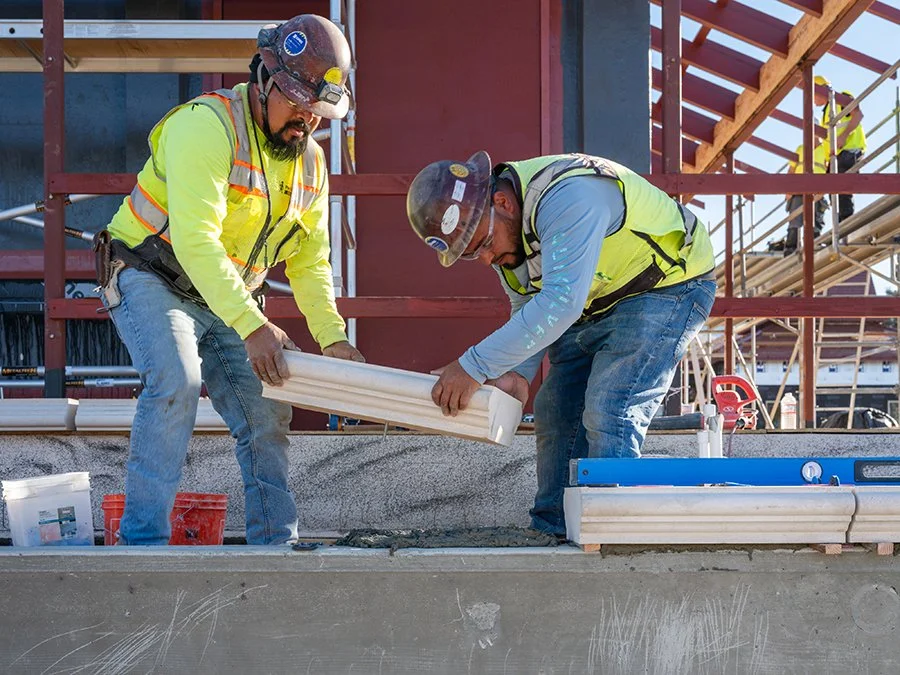
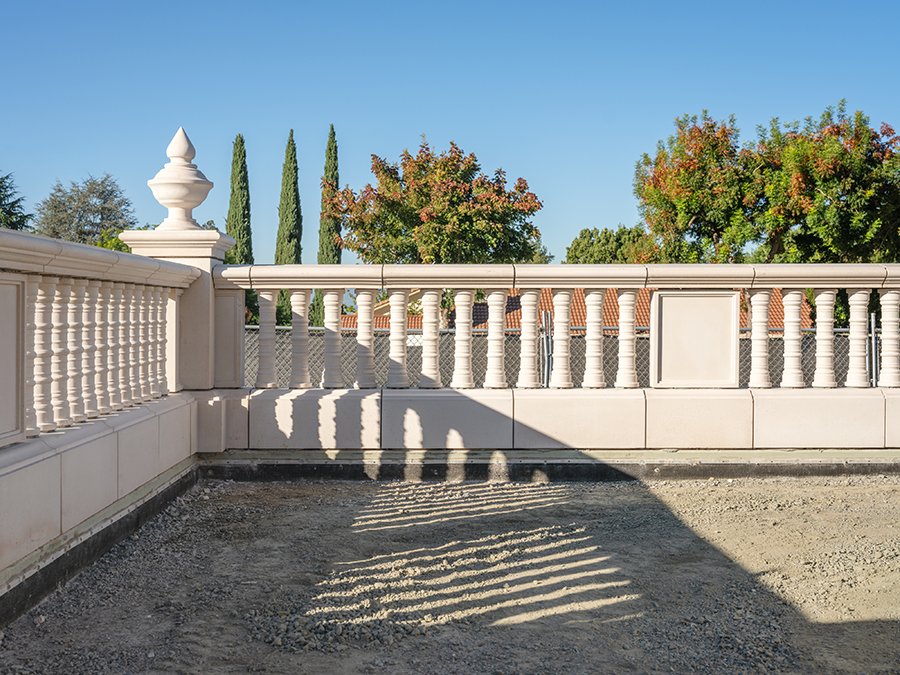
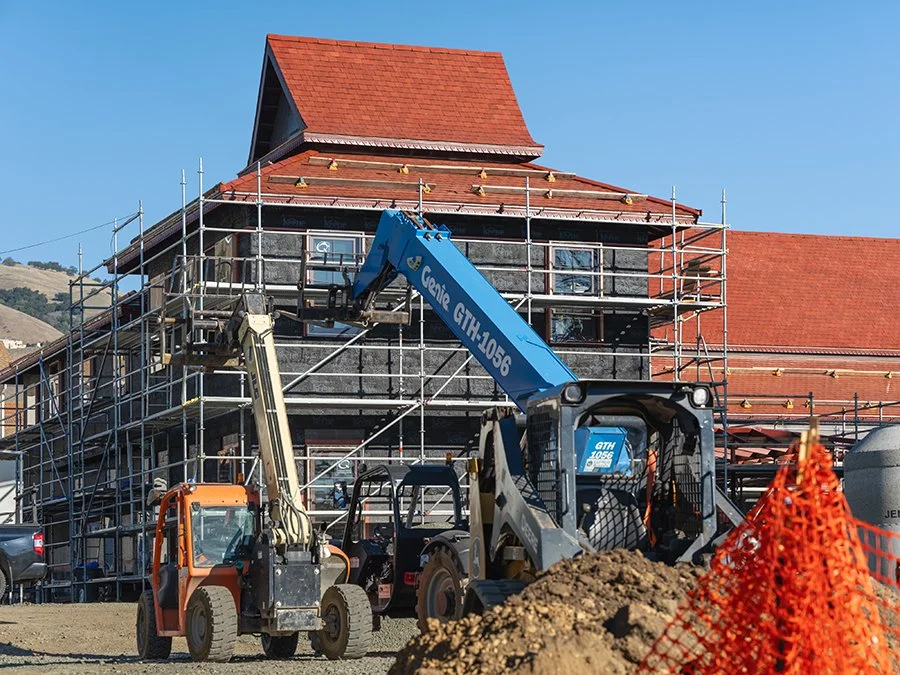
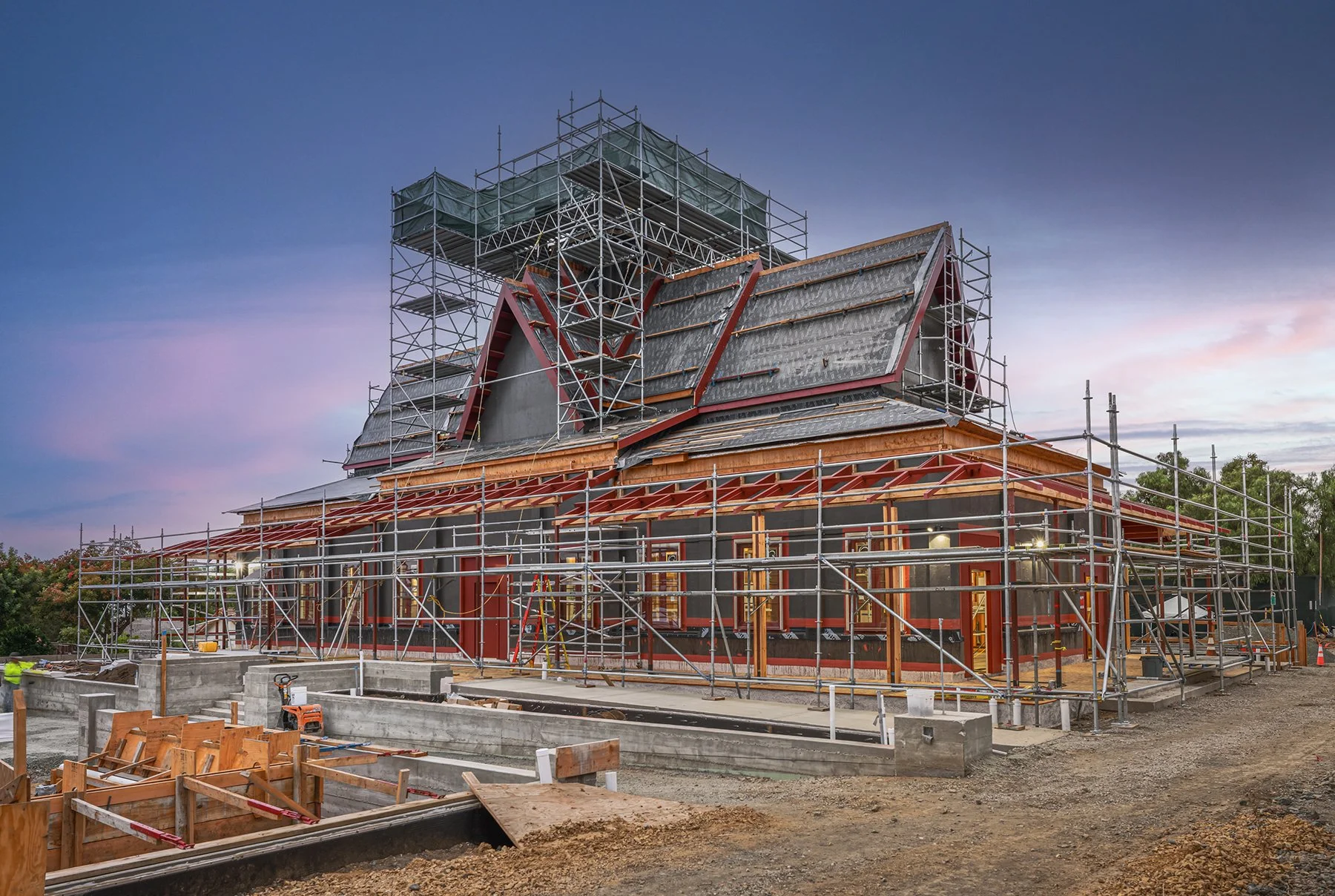
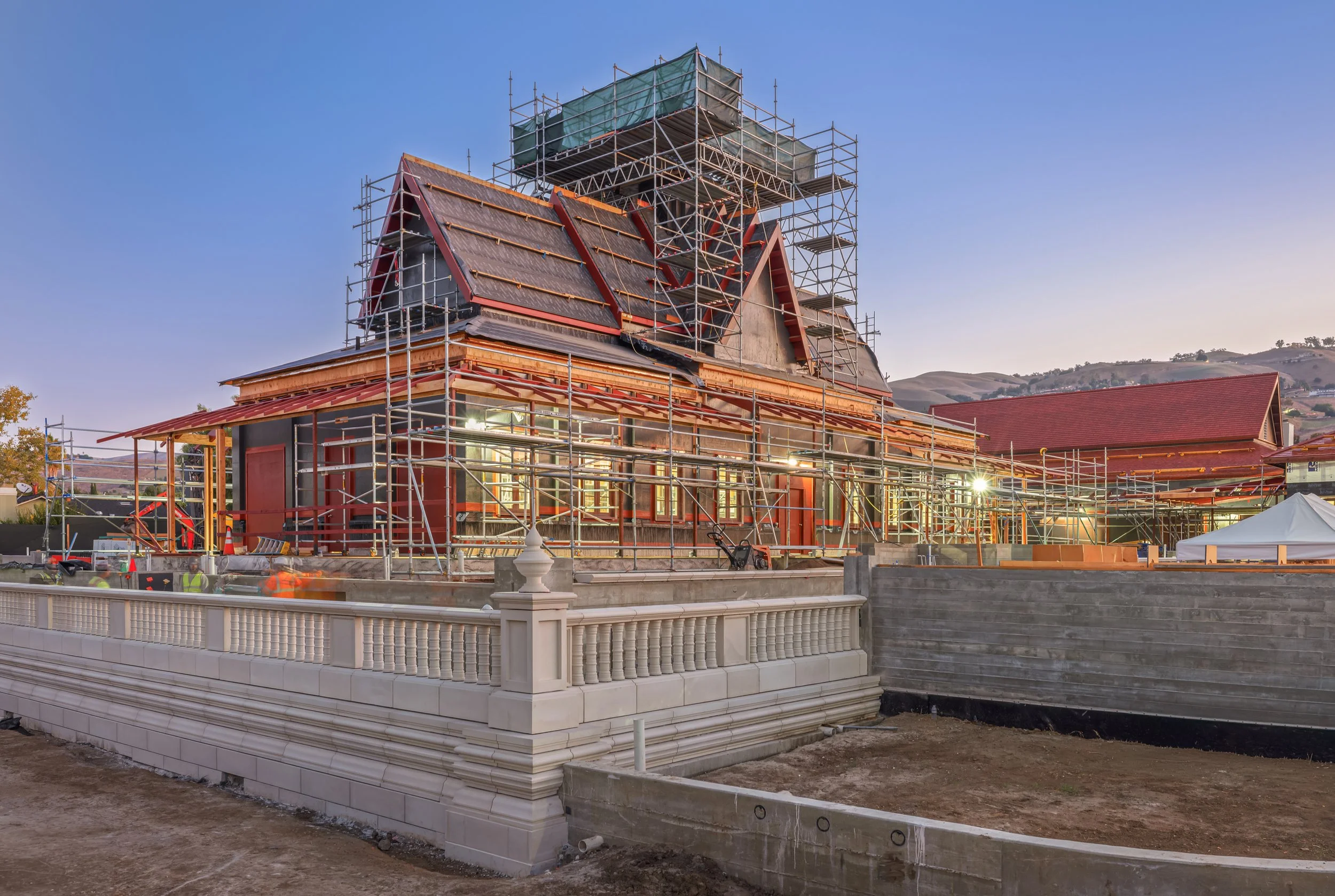
Back in San Jose, construction continues across the temple grounds. From the Community Building, there’s a clear view of the sanctuary and daily activity underway. Exteriors are advancing. Mechanical, electrical, and plumbing systems are being finalized. Decorative elements are being integrated across the site. Each contributes and helps move the project forward in meaningful ways.
Preparing for Interior Work
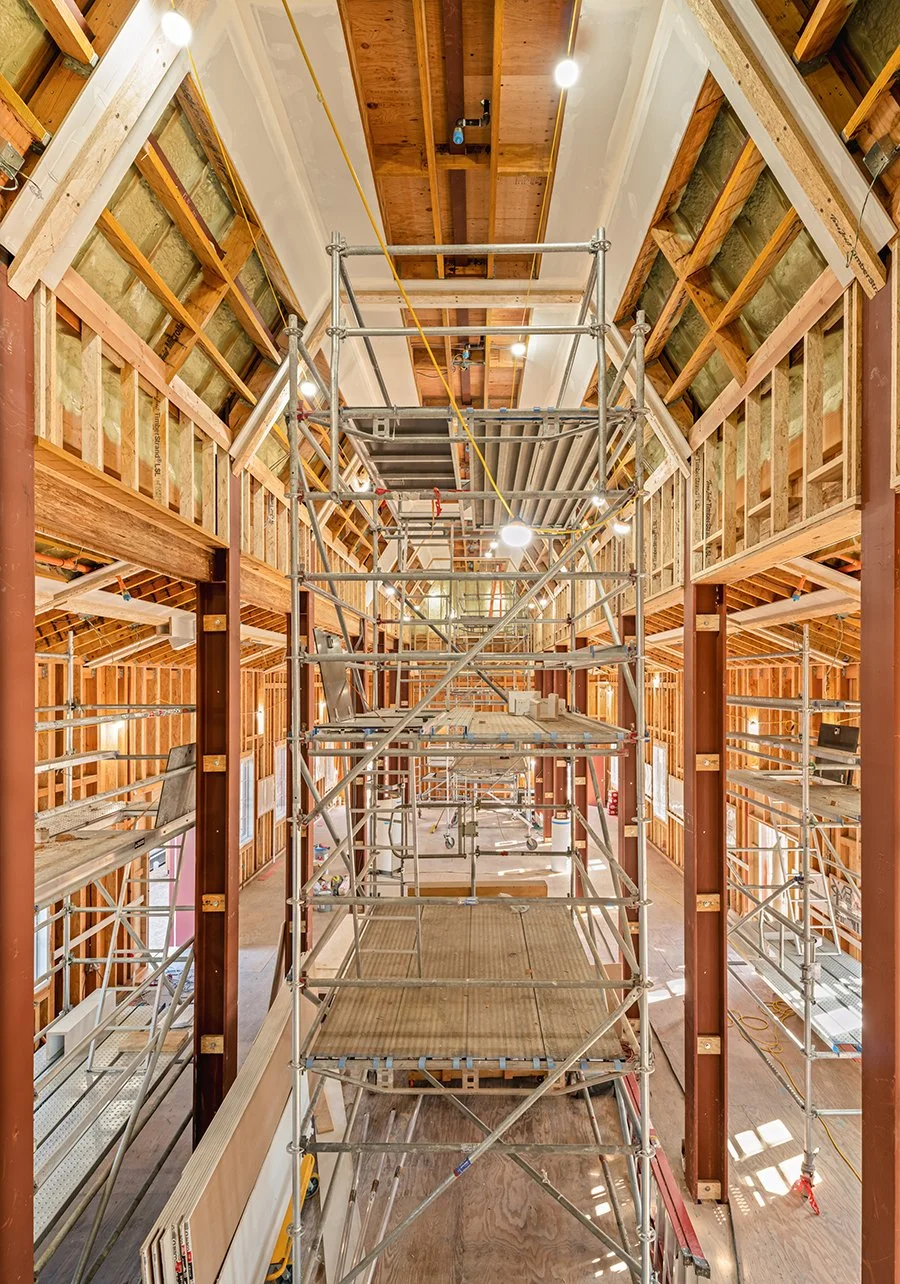
Inside the Community Building, work has shifted above the ceilings. Large heating and cooling equipment is now in place, along with the ductwork needed to move air throughout the space. The volume here is significant, with long spans, high ceilings, and broad open areas, all of which influence the size and layout of the equipment.
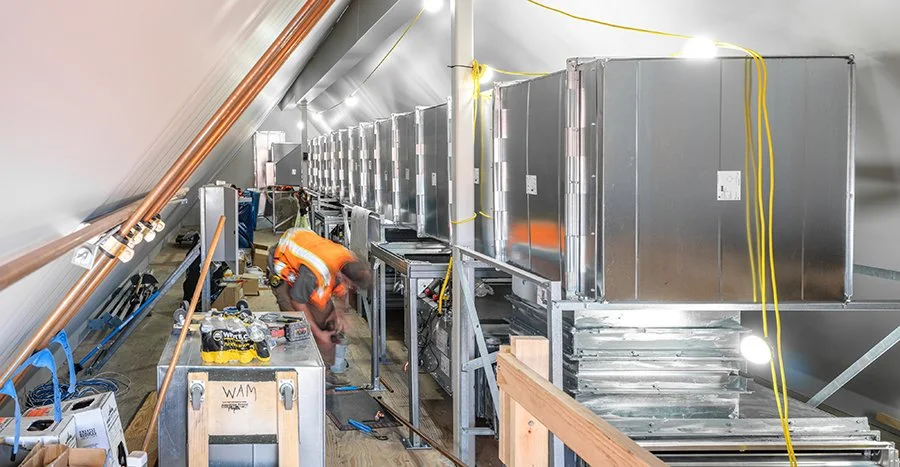
This infrastructure supports heating, cooling, and air circulation across the space. Crews are focused on aligning and securing each element to ensure it fits and functions as designed. The work will eventually be hidden, but plays a critical role in the building’s performance and comfort.
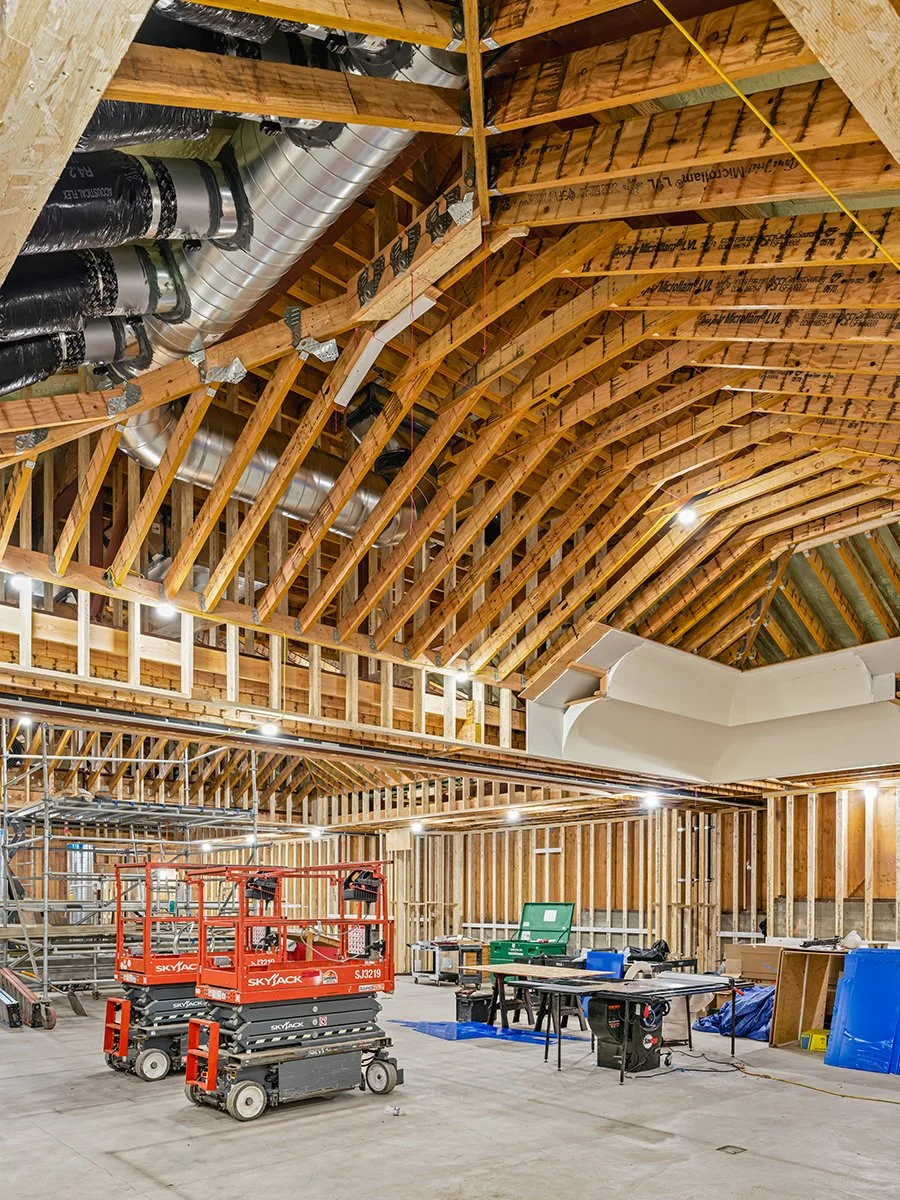
Before any interiors can be closed up, the mechanical, electrical, and plumbing systems must be fully installed and tested. Installing drywall depends on the successful completion of this phase.
Fire Protection and Coordination
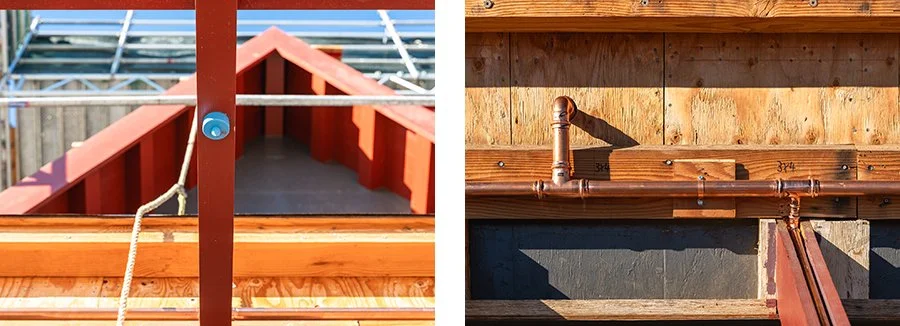
In the sanctuary, sprinkler installation is progressing. One of the more complex areas is the exterior circulation corridor, a covered walkway that wraps around the building. This is an unconditioned space with exposed trusses and beams, all visible from below.
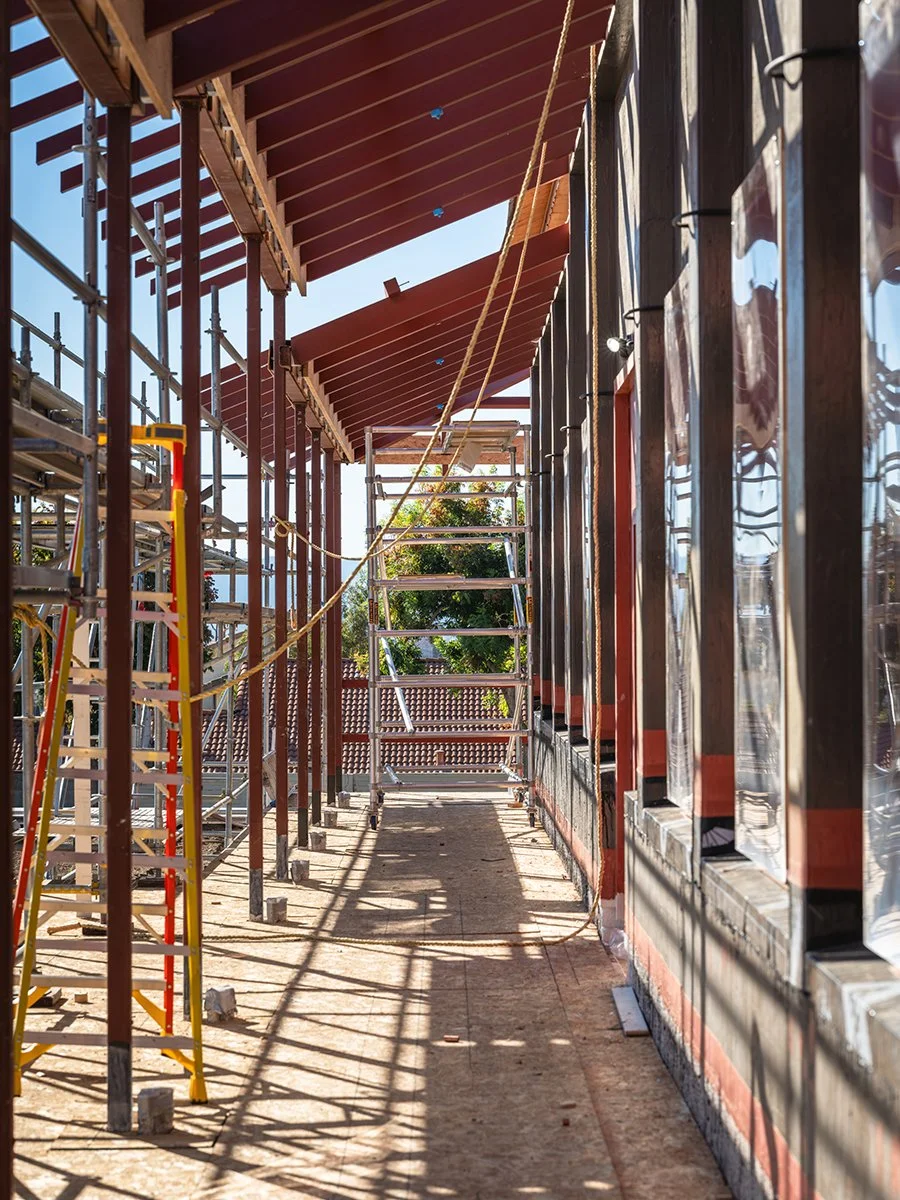
Routing pipe through this structure requires a carefully coordinated effort to preserve the architectural intent while meeting life safety requirements. The result is a clean and integrated installation. These systems are designed to protect, but they are also shaped to respect the space they inhabit.